Watercolor Thanksgiving Turkey Clipart Review
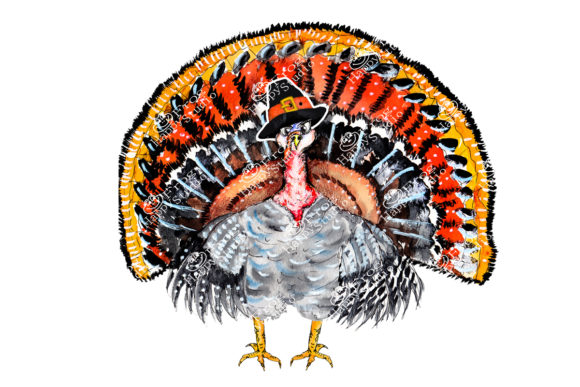
As a designer who has spent years translating digital art into tangible thread, I approach every new asset with a critical eye. When I first opened the file for Watercolor Thanksgiving Turkey Clipart, my initial thought was about mood rather than mechanics. This design immediately evokes the soft, nostalgic warmth of autumn. It does not scream with aggressive graphics; instead, it whispers through gentle gradients and organic shapes that mimic wet-on-wet painting techniques. For an embroidery project, this aesthetic presents a unique challenge: how do we replicate the fluidity of watercolor using rigid thread? The answer lies in understanding where this specific Illustrations style shines and where it requires careful handling to avoid looking muddy or undefined.
The Real-World Test: From Screen to Fabric
To truly evaluate the potential of Watercolor Thanksgiving Turkey Clipart, I imagined a specific scenario: creating a limited-run collection of custom embroidered tote bags for a local boutique's holiday pop-up. The goal was to offer a product that felt artisanal and high-end, distinct from the standard block-printed designs flooding the market. In this context, the soft edges of the turkey design are its greatest asset. Unlike a sharp vector outline that demands precision, the watercolor style allows for slight variations in stitching that actually enhance the handmade feel.
When visualizing this on a sturdy canvas tote bag, the fill stitch areas would need to be carefully managed. A dense fill might flatten the artistic intent, making the turkey look like a solid blob rather than a painted image. Instead, I would likely opt for a lighter stitch density or perhaps incorporate some satin stitch along the feather lines to add dimension without overwhelming the fabric texture. The result would be a tote bag design that feels curated and thoughtful, appealing to customers looking for a personalized gift that stands out in a sea of generic holiday merchandise.
Navigating Fabric and Hoop Challenges
While the design is charming, it is not universally applicable without adjustment. One of the primary concerns when working with Watercolor Thanksgiving Turkey Clipart is the choice of background fabric. Watercolor effects rely heavily on negative space and subtle color transitions. If you attempt to stitch this onto a dark fabric, such as a black sweatshirt, the delicate nuances will vanish unless you use a heavy underlay or consider it as an applique design layered over a lighter base. Even then, the "bleeding" effect of watercolor is difficult to achieve on dark backgrounds without significant post-processing or very specific thread choices.
Furthermore, the hoop size becomes a critical factor. The organic nature of this clipart suggests a larger format where the details can breathe. Trying to shrink this design down to fit a 4x4 inch hoop on a cap or a small baby onesie could lead to frustration. Tiny lettering or intricate feather details often get lost when scaled down, resulting in a messy stitch density that causes puckering on thin or stretchy fabrics. For baby embroidery, I would recommend using this design only on flat, stable items like pillow covers or tea towels, avoiding curved surfaces like caps where the distortion could ruin the flow of the watercolor strokes.
Stitching Strategy for Visual Clarity
Success with this machine embroidery design depends on how you manipulate the thread colors. To capture the essence of watercolor, you cannot simply pick one shade per area. You will need to utilize multiple shades of the same hue within a single section to create depth. This technique, often called variegated stitching, mimics the way paint pools and dries. However, this increases the number of thread changes, which impacts production time for any commercial embroidery project.
If you are an Etsy seller or running a craft business, you must weigh the labor cost against the perceived value. Customers paying for a finished product expect professional results. If the thread colors clash or the transition between colors looks abrupt, the illusion of watercolor breaks, and the item may appear cheap. Always test the design on scrap fabric first. Check the contrast between the design and the background material. Does the turkey stand out, or does it blend in too much? These decisions directly affect customer trust and the overall presentation of your brand.
Commercial Viability and Licensing Checks
Before integrating Watercolor Thanksgiving Turkey Clipart into your digital product portfolio or selling physical goods, you must verify the licensing terms. Many clipart assets fall under strict categories regarding commercial use. Some licenses allow for handmade products but prohibit reselling the embroidery file itself. Others may limit the quantity of items you can produce. As a professional, I always confirm these details to protect my business from legal issues. If the license permits, this design could become a staple for holiday embroidery collections, particularly for small shop products aiming for a cozy, rustic aesthetic.
Consider also how this design fits into your broader brand consistency. If your shop specializes in bold, modern graphics, a soft watercolor turkey might feel out of place. However, if your niche is vintage-inspired or family-oriented gifts, it aligns perfectly. The design's versatility allows it to work well on aprons, kitchen towels, and even blankets, provided the fabric weight supports the stitch count. For printable mockups, ensure you show the design on various textures so potential buyers understand exactly what they are purchasing.
Final Designer Notes for Success
In conclusion, Watercolor Thanksgiving Turkey Clipart is a beautiful asset that requires a skilled hand to translate effectively from screen to stitch. It excels in projects where a soft, artistic touch is desired, such as home decor and premium apparel. However, it demands attention to detail regarding stabilizer choice, fabric selection, and color blending. Do not rush the process. Take the time to review the running stitch outlines and ensure the design assets are properly converted for your machine.
Whether you are creating a custom apparel line for a client or crafting a personalized gift for a friend, the key is preparation. Test on scraps, compare light and dark backgrounds, and never underestimate the impact of proper stabilization. When executed correctly, this design elevates a simple embroidered patch or sweatshirt embroidery into a piece of wearable art that captures the true spirit of the season. Use it wisely, and it will serve as a valuable addition to your creative toolkit.